Canon Digital Ixus 70 For Mac
Canon Digital IXUS 75 Press release: Canon today updates its Digital IXUS range with two striking new models – the 7.1Mp Digital IXUS 75 and Digital IXUS 70. The ultra compact Digital IXUS 75 sports a metallic finish with a massive 3.0” PureColor LCD, offset by a distinctive circular accent around the lens. A touch sensitive control dial provides easy access to key camera settings.
The Digital IXUS 70 is Canon’s slimmest optical zoom camera yet, featuring a clean, minimalist design inspired by the original IXUS. Measuring only 19.4mm deep, it comes in both black and silver finishes. Both cameras incorporate a clever new Red-Eye Correction feature in Playback mode.
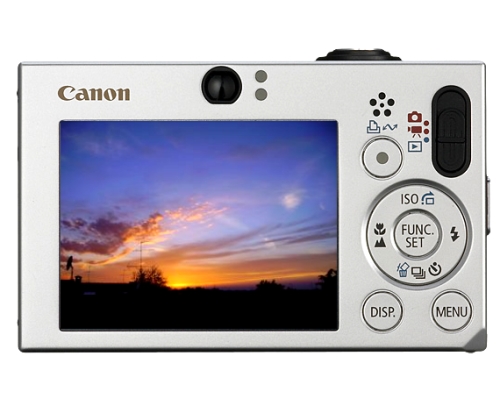
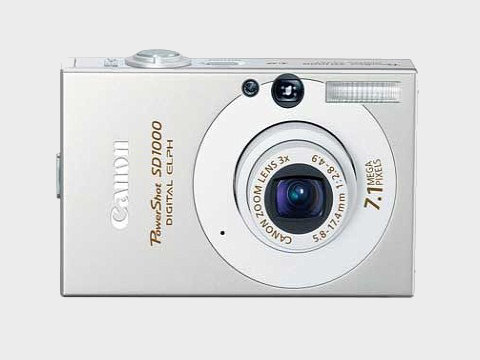
The Digital IXUS 75 and Digital IXUS 70 offer superb response times and high-quality image rendering through Canon’s DIGIC III image processor. DIGIC III also powers Face Detection and Noise Reduction Technology, making it easier for users to capture sharp, well-exposed images in clubs, restaurants and other social situations. Features at a glance:. 7.1Mp.
3x optical zoom 35-105mm (35mm equivalent) with UA lens. DIGIC III with Face Detection AF/AE/FE and Noise Reduction Technology. Red-Eye Correction in playback. 3.0” PureColor LCD (Digital IXUS 75); 2.5” PureColor LCD (Digital IXUS 70). ISO 1600 and Auto ISO Shift. 17 Shooting modes plus My Colors photo effects.
30fps VGA Movies and Time Lapse Movie function “With their advanced functionality and bold design concepts, these new models go beyond the conventional,” said Mogens Jensen, Head of Canon Consumer Imaging, Europe. “It’s this unfaltering pursuit of new technologies and new aesthetics that set the Digital IXUS range apart from the competition.”. DIGIC III: Better photos, easily Canon’s DIGIC III processor introduces several advancements that reduce the risk of blurred or poorly exposed photographs. Face Detection AF/AE/FE automatically detects up to nine faces within a scene and optimises focus and exposure accordingly. Fast and highly accurate, the system has been enhanced on these models to control flash exposure (FE), and is now capable of detecting faces at greater distances. Face Detection Technology also enables Red-Eye Correction in playback.
Users can quickly detect and remove red-eye in captured images directly in-camera, ensuring that people shots look natural and accurate. Noise Reduction Technology produces smooth images at up to ISO1600, allowing for flash-free photography in dimly-lit areas such as parties and nightclubs. A new Auto ISO Shift function prevents blur by giving users the option to boost the ISO setting – and consequently shutter speed – with a single button press, whenever the camera predicts camera shake. LCD enhancements A range of enhancements has been made, based on feedback collected from users across the globe. Both cameras include new high resolution (230k pixels) PureColor LCD screens, which offer users a wide range of visual benefits.
Colour tones have been enhanced by up to 30% for vibrant, true-to-life colour reproduction. The wide viewing angle of the screen is complemented by an anti-reflective coating, which makes it easy to compose and review images even in brightly-lit conditions.
A scratch-resistant layer provides extra protection against knocks and scrapes. Settings for shutter speed and aperture are now displayed on the LCD during shooting. When using Auto ISO and High ISO Auto, the LCD will also display the ISO speed.
These camera settings are now recorded as EXIF data for review in playback. Users of the Digital IXUS 75 can instantly review captured images using a dedicated Playback button, which acts as a toggle between shooting and playback modes. The Print/Share button doubles as a customisable Shortcut button on both cameras, providing one-touch access to frequently used functions, such as movie recording or white balance settings. Creative options A total of 17 shooting modes are provided, including a wide selection of Special Scene modes such as Portrait, Indoor and Night Snapshot. Digital IXUS 75 users can access modes via the Touch Control Dial.
Both cameras include My Colors photo effects for creative experimentation before and after shooting. A new Time Lapse Movie function allows users to capture changing scenes – such as drifting clouds, a blooming flower or a bustling city street – for accelerated playback as smooth VGA-quality movie clips. Captured at one-second or two second intervals, a scene of two hours’ duration can be condensed to a fluid eight minute or four minute movie file. Users can also record standard VGA movies with sound at 30fps and QVGA movies with sound at 60fps. Software and CANON iMAGE GATEWAY The Digital IXUS 75 and Digital IXUS 70 are bundled with the following Canon Software: ZoomBrowser EX 5.8 (Windows), ImageBrowser 5.8 (Macintosh): For organising and editing images, movies and slideshows, or creating and printing digital photo albums. PhotoStitch 3.1: For creating panoramic photos from multiple images (Windows and Macintosh). The bundled software supports Windows 2000 (SP4), XP (SP1-2), Vista and Macintosh OS X v10.3-v10.4.
The cameras support PTP for driverless transfer to Windows XP and Macintosh OS X, along with MTP for image and movie transfers to Windows Vista. Purchasers of the cameras are eligible for membership of CANON iMAGE GATEWAY,1 100Mb of online‘personal gallery space for sharing images with family and friends.
Accessories Optional Waterproof Cases (Digital IXUS 75: WP-DC14, Digital IXUS 70: WP-DC13) allow users to take the cameras to a depth of up to 40m for compelling underwater shots. Specially designed Waterproof Case Weights (WW-DC1) are available to control camera buoyancy. Other accessories include:. High Power Flash (HF-DC1). Soft Leather Case (DCC-60). Digital IXUS Metal and Leather Neck Straps. Compact AC Power Adapter (ACK-DC10) Technologies Explained DIGIC III Canon’s DIGIC III (DIGital Imaging Core) image processor manages all of the camera’s primary functions to optimise operating efficiency.
Advanced image processing algorithms deliver superb image detail and colour reproduction with accurate white balance. Key improvements over DIGIC II include faster response times, advanced Noise Reduction Technology and support for Canon's Face Detection AF/AE/FE as well as Red-Eye Correction in playback.
Imaging Resource rating 4.0 out of 5.0 Canon PowerShot SD1000 Overview by Theano Nikitas Review Date: 5/08/2007 When the first Canon ELPH hit the shelves in 1996 as an APS film camera, its compact size and innovative 'box and circle' design certainly held more appeal than the film format the little camera supported. While APS is a distant memory, Canon continued the ELPH legacy in its digital camera line. In the digital world, the ELPH still looks as sleek and sexy as it did 11 years ago. Although minor tweaks to the design have come over the years, Canon returned the ELPH to its roots shortly after the ELPH's tenth anniversary with the introduction of the SD1000, a camera whose retro look is almost identical to that of the original model. In addition to its compact size and eye-catching design, the 7-megapixel SD1000 features a standard 3x optical zoom with a 35mm equivalent focal range of 35-105mm, a 2.5-inch LCD that delivers 230,000 pixels of resolution and, a rarity in cameras this size, an optical viewfinder. As is typical for the digital ELPH series, this point-and-shoot camera lacks manual aperture and shutter speed controls, but offers a series of scene modes, exposure compensation, and manual and auto ISO. A new on-demand Auto ISO Shift feature bumps the light sensitivity up to a maximum of 800 with a simple push of a button.
White balance options include auto, several presets, and custom (manual). The SD1000 utilizes Canon's DIGIC III processor and offers new face detection technology and in-camera red-eye correction. Although its auto shutter speed maxes out at only 1/1500 second, long exposures are possible up to 15 seconds (the one way you can set a manual shutter speed, available through the Function Menu). Fine-tuning adjustments, custom settings for the self-timer, stitch-assist for up to 26 shots, and versatile movie options round off some of the camera's most noteworthy features. To put the SD1000 in perspective: Despite its numerical identification, the SD1000, at $299.99, is about $50 less expensive than its sibling, the $349.99 SD750. The latter is slightly larger and heavier, has gently sloping edges as opposed to square corners, is equipped with a 3-inch LCD, no optical viewfinder, and replaces the SD1000's Function/Set button with a new Touch Control Dial - one of those love-it or hate-it type of features.
Otherwise, the two cameras are essentially the same. Canon PowerShot SD1000 User Report by Theano Nikitas Heritage. Sure, there are plenty of pocketable digital cameras on the market that are smaller, thinner, have larger LCDs than the SD1000; and there's no shortage of small cameras outfitted in fun fashion colors.
But the stylish and diminutive SD1000 not only looks good and fits easily in shirt or pants pockets, but the ELPH line has a track record of good performance and solid image quality on its side. A point-and-shoot interface combined with an intuitive control layout and easy-to-navigate menu system puts beginners at ease, and makes short work of picture-taking for more experienced users. Even without manual aperture and shutter-speed controls, the SD1000's portability and top notch image quality may even appeal to digital SLR users who want a simple, take-anywhere sidekick for quick snapshots. Simple and stylish, the Canon SD1000 Digital ELPH looks a lot like the original ELPH. Face Detection (FD) is quickly becoming a standard feature, and Canon has one of the most responsive and accurate FD technologies I've worked with to date. The SD1000 is equipped with Canon's latest FD technology that not only recognizes multiple faces and helps ensure accurate focus and exposure of subjects. It also analyzes and adjusts flash output according to shooting conditions.
Canon takes a gentler approach to raising ISO to increase shutter speed and avoid blurry images from camera shake than others that tout 'anti-shake' features. Other cameras often produce excessively noisy images from their extremely high ISO settings. That's not to say that the SD1000 is free from image noise or that its Auto and Hi ISO settings can't go beyond reasonable limits, but its kept under better control. ISO can be set manually from 80 to 1600, and there's a convenient one-button/one-shot Auto ISO shift that boosts the ISO up to a maximum setting of 800 when implemented regardless of what ISO setting has been selected manually. ISO 800 is the maximum you want to use with the SD1000, so that's what I mean by a gentler approach. You can reach higher if you want to, but the camera's not going to take you there without permission.
Although the SD1000 is certainly easy to use in its basic auto mode, there are a number of hidden features that will be easily overlooked by those who don't read the manual or spend some time drilling down into the Function menu. Hidden within the My Colors menu, for example, you'll find a Custom button that reveals adjustments for contrast, sharpness, saturation, skin tone and individual red, green, and blue tones.
Some Scene modes are also hidden, so it's a good idea to read through the manual. But once you've discovered some of these less-than-obvious options, you'll find that the SD1000 has some surprisingly useful functions to complement its attractive design.
In keeping with the ELPH's original design, the SD1000 is available in black on silver; but if that's too retro for your taste, no worries: the camera is available in silver-on-silver as well. Its small size and light weight are an open invitation to take the camera with you wherever you go and it's as comfortable to wear around your neck dangling from a lanyard as it is tucked away in a pocket or purse. At the same time, the camera is solidly built and capable of withstanding the rigors of being carried around town or on a hike through the woods without worry. A flush-mounted LCD and simple layout make for smooth elegance. Unfortunately, the Four-way navigation disk is tough to use accurately with its very flat design. But as with any small camera, it's important to try the SD1000 on for size to make sure the handhold is comfortable and the controls are manageable. The camera has no grip and not much room to rest your thumb other than on the vertical switch on the camera's rear panel, but I was able to hold the camera easily for extended periods of time without suffering from finger cramps and one-hand shooting was quite easy.
My fingers never strayed in front of the lens, the flash or the tiny microphone and the controls, which by necessity are grouped to the right of the LCD, were within easy reach. But my hands are relatively small and those with larger hands may not experience the same level of comfort. Controls are logically arranged and are reasonably sized considering the limited real estate on the camera's rear panel. The speaker sits to the left of the mode switch, just above the Print/Share button, which can also be programmed for one-touch access to one of a number of functions like Exposure Compensation, White Balance (the full range or Custom only), Movie mode and display off, among others. For my purposes it was convenient to assign Exposure Compensation to the Print/Share button; although when moving between indoor and outdoor shooting, I also liked using it for White Balance presets. The Function/Set, Display and Menu buttons were large enough for easy operation, but I found that the Four-way controller that surrounds the Function/Set button required extra effort to manipulate; not only because it was somewhat less responsive than the buttons, but because I had to depend on my thumbnail rather than the tip of my thumb to press the appropriate mark without accidentally triggering the Function/Set button.

The lovely minimalist design is just too flat for a thumb to actuate with accuracy, unless you're really paying attention. While accessing menus for ISO, flash settings, shooting mode, and focus/distance via the Four-way controller is convenient, the menus automatically close within a second or two, leaving little time to think about what setting to choose. It was mostly annoying when choosing an ISO since all options - Auto, High, and manual settings - don't fit on a single screen. If I didn't start scrolling quickly, the menu would disappear and I'd have to start over again. This may be especially frustrating for those unfamiliar with the options offered within each of these quick-access menus. And, activating red-eye reduction and slow synchro flash settings required a trip to the system menu.
On the other hand, all menus are easy to understand and navigate. But, as I mentioned earlier, some functions are buried deep within the Function menu, so not only do you have to know they exist and where they are, you have to take extra time to access them. Naturally, the more I used the camera, the quicker I was able to change settings on the fly.
After using cameras with LCDs so reflective that I could see myself more clearly than the scene I was trying to capture, the SD1000's 2.5-inch monitor was a pleasure to use. It's not perfect and there were times when I had to struggle to compose a scene in bright sunlight or resort to the tiny (and difficult to use) optical viewfinder but it's much better than others when it comes to clarity in bright light. Much of this increased usability is probably due to Canon's new PureColor LCD and its multi-level coating, which is designed to reduce glare and 'resist scratches, smudges, and fingerprints.' It's not a panacea for keeping the LCD clean, however, as just pulling the camera out of my jacket pocket left fingerprints. The LCD display also performed well in low light, automatically gaining up even when photographing the dark abyss under my desk.
As is common, the LCD's image is a little noisier with gain applied, but it showed less grain than most. A slower refresh rate was also expected under these dimly lit conditions but I noticed no ghosting when moving the camera in these darkened conditions. Full onscreen shooting information is available with the SD1000's multiple display options, and both a grid overlay and 3:2 aspect ratio guide are available as well in record mode. A histogram accompanies the information display in playback mode. (I address the value of these display options more fully in the Shooting section.) Performance. Despite the fact that the power button lies almost flush with the top of the camera, it was easy to find by touch, and the little camera was powered up and ready to go in no time. The camera's shot-to-shot speed was equally responsive; and even when using the flash, I didn't have to wait too long to take the next shot, nor was there much hesitation between pressing the shutter and snapping the picture.
Continuous shooting speed was respectable as well. Like most cameras in its class, the SD1000 offers a moderate focal range with its 3x optical zoom lens. But the miniature zoom lever moved the lens smoothly and reasonably fast throughout its 35-105mm focal range. You won't be able to shoot particularly broad vistas with this focal range unless you use the camera's stitch-assist to put together a panorama, nor will you be able to capture distant scenes or subjects with the SD1000's telephoto reach of only 105mm (35mm-equivalent). But for day-to-day shooting I found the 3x optical zoom sufficient.
Battery and card. The SD1000's battery and memory card compartment is nestled on the camera's bottom, covered by a plastic door.
Powered by a tiny rechargeable Lithium battery, the SD1000, when using the LCD, has a CIPA rating of approximately 210 shots on a fully charged battery. Since I generally don't spend a huge amount of time reviewing images in-camera other than to check exposure and focus, I was unable to exceed the estimated 210 shots on a battery charge. Depending on your playback habits, your experience may be different. Unless you think you'll exceed a couple of hundred shots between charges, this average battery life shouldn't be a problem. A tiny camera, of course, comes with a tiny flash.
Canon Ixus Camera
The SD1000's flash powered down nicely when set to Macro, but not surprisingly, it doesn't have enough strength to reach beyond 12 feet at wide angle. At telephoto, it hardly puts out enough light for good exposures six feet.
Note that this is when the camera is locked to ISO 100; when set to Auto ISO, the SD1000 manages good exposures at 11 feet at wide angle and 6.6 feet at telephoto with minimal ISO boost as Canon specifies (ISO 250 and 200 respectively). We also noticed some flash drop-off around the edges of images shot at wide angle. The camera's automatic face detection (activated from within the camera's system menu) worked quite well and was faster and more accurate than the competition, especially when dealing with multiple subjects.
Autofocus was generally quick and accurate with the camera's 9-point AiAF turned on, although on occasion I turned it off since having a single (centered) focus point enabled me to have better control when I wanted to the focus frame to be centered. Otherwise, I'd have to recompose when the AiAF focus points (indicated by green outlined boxes) weren't exactly where I wanted them to be (focusing on the grasses surrounding a flower rather than on the flower, for example). But focusing under low light was respectably fast, thanks to the amber AF assist lamp. As expected, I was pleased with almost all of my test images.
With the exception of a few over-exposed daffodils that were shot in bright sunlight, the SD1000's metering options (evaluative, center, and spot) all did a good job producing well-balanced exposures under a variety of lighting conditions. Colors were rich and accurately rendered and images were sharp. Shooting with the SD1000 was fun. Because the camera is so portable, I found myself taking pictures I wouldn't have otherwise thought about capturing. Rather than rolling my eyes at the thought of carrying a camera on a walk through a local park, I happily slipped the camera into my jacket pocket for traveling to the local park. Once I arrived, I hung it around my neck with a lanyard so all I had to do was lift it to my eye and shoot when I wanted to grab a snapshot.
The camera lived on the dining room table so I could pop outside to photograph some spring flowers when the spirit (or the light) moved me. It traveled with me in my purse as well, and was a hit at a small gathering of friends.
Never once did I feel that carrying the Canon SD1000 was a burden. Of course, there were times I wished I had a digital SLR for speed and control, and a long telephoto lens for capturing images of birds in flight.
But for casual shooting, I really didn't miss manual controls. The Canon SD1000 was generally fast enough for most situations, and has enough functions to allow some control.
Canon Ixus 177
I usually kept the SD1000 set to 'Camera Manual' so I could access all of the camera's functions (only a minimal number of features are available in Auto mode). Working mostly with exposure compensation, ISO, and white balance, I was able to satisfy the photographic instinct to adjust settings according to subject and shooting conditions. Activating the grid overlay helped me keep horizons even, and I was thrilled to find aperture and shutter-speed displayed each time I depressed the shutter button halfway.
With the shutter speed information so readily available, I was able to judge whether and when I needed to either use the flash, increase the ISO, use a tripod, or simply forget about the shot. Though the SD1000 has an ISO of 1600, the noise levels were too high for my taste. I usually kept it set to ISO 800 or below.
The full information panel in playback, which includes a histogram, was also very helpful when judging exposure after capture. Other than the annoyances mentioned earlier - like difficulty using the Four-way controller and having the ISO menu automatically turn off too soon - I enjoyed using the Canon SD1000 and made good use of the Function button for a direct connection to many of the settings I needed to change most often. It's not a perfect system, but it works well enough when adjustments are necessary. The Canon PowerShot SD1000 is a fine little camera with a number of attributes that will please the snapshooter, and may even attract the more sophisticated photographer who wants a small take-anywhere digital camera. Video fans will appreciate the multiple movie modes, including time lapse and fast frame rate options.
Regardless of experience level, most everyone will find image quality more than satisfying, although it's important to maintain control over ISO settings to keep image noise to a minimum. That some features are buried deep within the menu system probably won't bother snapshooters very much, since it's unlikely they'll use them on a regular basis.
It will be frustrating to photographers who want to wring every last bit of control out of the camera. But if you're as big of an ELPH fan as I am, you won't let any of those minor drawbacks dissuade you from slipping a Canon SD1000 into your pocket or purse. Basic Features. 7.1-megapixel CCD.
3x optical zoom lens (equivalent to a 35-105mm lens on a 35mm camera). 4x digital zoom.
Optical viewfinder. 2.5-inch color LCD monitor. Automatic exposure. Built-in flash with red-eye reduction and slow synchro options. SD/SDHC compatible, with 32MB card included.
USB 2.0 Hi-Speed computer connection. Rechargeable Lithium battery and charger included. Software for Mac and PC; Windows Vista compatible.